Hiển thị các bài đăng có nhãn TIFF Cinematheque. Hiển thị tất cả bài đăng
Thứ Sáu, 31 tháng 7, 2015
THE LEOPARD - Review By Greg Klymkiw - Magnificent, Heart-Achingly Romantic Visconti Epic @ TIFF Bell Lightbox Summer in Italy series & a gorgeous Criterion Collection BluRay
The Leopard (1963)
Dir. Luchino Visconti
Starring: Burt Lancaster, Alain Delon, Claudia Cardinale
Review By Greg Klymkiw
Christ Almighty, I love Luchino Visconti! Then again, what's not to love? The guy knocked us on our butts with one of the earliest forays into Italian Neo-realism, 1943's still-provocative Ossessione, his debut feature being the very first film adaptation of James. M. Cain's immortal crime melodrama "The Postman Always Rings Twice". With each subsequent picture, he progressively ladled on the most gorgeous, sumptuous compositions in service to increasingly melodramatic narratives.
Still, he almost never forgot his roots in the tradition that became far more synonymous with Roberto Rossellini and Vittorio De Sica. In spite of his penchant for the melodrama driving his epic of politics, war and romance, The Leopard (and so many subsequent films), neo-realism continued to be pervasive within Visconti's unflagging attention to detail, especially during both the battle scenes and lavish rituals of Sicily's ruling class which take breathtaking command of this stunningly great picture.
Based upon the novel by Giuseppe Tomasi di Lampedusa, Visconti and his raft of screenwriters including himself, Pasquale Festa Campanile, Enrico Medioli, Massimo Franciosa and Suso Cecchi d'Amico, craft the compelling tale of Don Fabrizio Corbera (Burt Lancaster), the powerful, respected and beloved Prince of Salina. Whilst many of his family members, neighbours and the estate's personal Catholic priest all fear the recent uprisings to unify Sicily and Italy, led by the savvy military genius General Garibaldi and his 1000 "redshirts", Don Fabrizio harbours a romantic kinship with the rebels. He even finances them and offers his unconditional blessings to his favourite nephew, the dashing, handsome Tancredi (Alain Delon) to join the "redshirts'" cause.
Don Fabrizio is more than happy to share his beliefs with those who will listen: the uprisings will ultimately mean everything and nothing. Yes, they will further unify Italy, but in fact, the "changes" are necessary to maintain the "status quo". Essentially, nothing will really change (at least in the immediate future) for Italy's aristocracy.
His relationship with Tancredi is especially close. The lad takes the place of the son he's always wanted. His love for Tancredi is such that he pooh-poohs the notion of his own daughter marrying the gorgeous swashbuckler since he's well aware of the fact that such a young man (his estate squandered by Fabrizio's brother) will require a wife of considerable wealth. Fabrizio has dowries to offer, of course, but with seven daughters, none of them will come close to adding up collectively to what he feels Tancredi will need for both himself and to solidify the power of the Corbrera Dynasty. Fabrizio is as politically and financially astute as he is a romantic.
In addition to the astonishing battle sequence involving the fall of Palermo to the "redshirts", Visconti continues to soar as a filmmaker with two key set pieces in the 3-hour-long film. One involves the family's journey to their country palace in Donnafugata and the other, a grand ball involving the presentation, or "coming-out" (if you will) of Tancredi's wife-to-be, the drop-dead gorgeous and mega-wealthy Angelica (Claudia Cardinale).
Though the pace of the film is as stately as the lives led by these Italian aristocrats, there is never a dull moment in the proceedings thanks to Visconti's eye for beauty and his knack for detail. (The astounding cinematography of the great Giuseppe Rotunno and the grand orchestral Nino Rota musical score are no slouches, either.)
From a luscious picnic on the way to Donnafugata, through to the traditional processions and celebrations in the town (if anyone wonders where both Scorsese and Coppola received considerable inspiration and cinematic tutelage, they need look no further) and finally the fascinatingly complex negotiations twixt Fabrizio and the somewhat vulgar landowner seeking "legitimacy" by marrying his daughter off to Tancredi, Visconti dazzles our hearts, minds and eyes with drama and images that are simply unforgettable.
One of the magnificent directorial touches is the subtle, almost heart-aching manner in which Visconti captures Fabrizio's passionate, though unrequited love for the stunning Angelica. Handled with looks and glances, along with Burt Lancaster's soulful performance, we feel the ultimate consummation of his desires within the vicarious thrills he enjoys through that of his dashing nephew. As Fabrizio's love flourishes, Tancredi's virtually explodes, and then during one of cinema's greatest ballroom dance sequences, Visconti allows us to bear witness to one of the most wildly romantic scenes in all of cinema history.
Angelica catches one of Fabrizio's glances and in a stunning moment of cinematic glory, we're witness to a sense of her looking into the handsome, distinguished visage of what she herself will grow old with once she marries Tancredi. She asks Fabrizio for a dance. He agrees, but only if the orchestra plays a waltz.
And then, as if the Heavens have parted to grant them their wish, a waltz strikes up and we feel the gooseflesh and tears rise within us as this grand, old Prince takes the stunning princess-to-be for a spin on the glorious dance floor under the majestic chandeliers of the palace and the admiring eyes of all who surround them.
As the film winds down, as the grand ball comes to a fitting end, Visconti allows us to follow the departing Don Fabrizio Corbera, the Prince of Salina as he slowly walks into the night air, disappearing into the darkness as a new generation takes command of the light.
As The Leopard so beautifully proves, things never really change. The cycles of life and love continue, long after we're gone - not forever, but swallowed by our eternal memories and those which supplant our own and create memories anew.
THE FILM CORNER RATING: ***** 5-Stars
The Leopard is part of TIFF's 2015 Summer in Italy series and also available on a gorgeous Criterion Collection Blu-Ray which includes a new high-definition digital transfer, supervised by director of photography Giuseppe Rotunno and presented in the original Super Technirama aspect ratio of 2.21:1, with uncompressed monaural soundtrack on the Blu-ray edition, the 161-minute American release, with English-language dialogue, including Burt Lancaster’s own voice, an audio commentary by film scholar Peter Cowie, A Dying Breed: The Making of The Leopard, a terrific hour-long documentary featuring interviews with Claudia Cardinale, screenwriter Suso Ceccho D’Amico, Rotunno, filmmaker Sydney Pollack, and many others, video interviews with producer Goffredo Lombardo and professor Millicent Marcus on the history behind The Leopard, original theatrical trailers and newsreels, a stills gallery of rare behind-the-scenes production photos and a lovely booklet featuring a new essay by film historian Michael Wood.
Nhãn:
1963,
Blu-Ray,
Criterion Collection,
Epic,
Greg Klymkiw,
Historical Drama,
James Quandt,
Luchino Visconti,
Melodrama,
Romance,
TIFF Bell Lightbox,
TIFF Cinematheque,
TIFF Summer in Italy 2015,
War
Thứ Tư, 29 tháng 7, 2015
THE GARDEN OF THE FINZI-CONTINIS - Review By Greg Klymkiw - Haunting De Sica Holocaust Drama in Digital Restoration at TIFF Bell Lightbox Series, "More Than Life Itself"
The Garden of the Finzi-Continis (1970)
Dir. Vittorio De Sica
Starring: Dominique Sanda, Helmut Berger,
Lino Capolicchio, Fabio Testi, Romolo Valli
Review By Greg Klymkiw
The grandly sprawling walled estate of the wealthy, powerful and aristocratic Finzi-Continis family in Ferrara, Italy has always been a world unto itself, but with the rise of Fascism in the 30s, it becomes a hermetically sealed paradise, a refuge from the madness of a country turning topsy turvy with prejudice, hatred and on the brink of world war. The Finzi-Continis are no ordinary family. They're Jewish in a country rapidly embracing virulent Antisemitism, but even amongst the Jews of Ferrara, they've always been set apart, living upon a pedestal of great intellect and seemingly high above those Jews amongst the middle and working class.
As always, though, prejudice and class seem to be the domain of older generations and the youth have always held the highest regard and friendship for each other, so that even when the wealthiest, most aristocratic Jews have been banned from the elite tennis clubs of Ferrara, its youngest, both Jew and Gentile, secret themselves away within the walls of the Finzi-Continis gardens to carry-on their traditions of weekly tennis matches and friendship.
Based on the novel by Ferrara's own Giorgio Bassani, one of Italy's great authors, it made perfect sense that one of Italy's great filmmakers, Vittoria De Sica would craft a movie adaptation of The Garden of the Finzi-Continis. One of De Sica's last films, it was not only honoured with one of a multitude of Academy Awards his work garnered, but was indeed a triumph of the style and sensitivity he'd become known for with such great works as Bicycle Thieves, Shoeshine, The Children Are Watching Us and amongst so many others, the immortal Umberto D.
Bassani was a Jew who managed to survive the Holocaust and continued to teach, write (pseudonymously, of course) and fight the fascist movement as a member of the Italian underground. Many of his books, like this one, dealt with life under Fascism for the Jews of Italy, but thematically, he found himself drawn to the notion of memory and its ability to act as both a balm and a force of great sadness and danger.
This is what De Sica so beautifully captures in this simple love story between childhood lovers, the aristocratic Micol Finzi-Contini (Dominique Sanda) and Giorgio (Lino Capolicchio), the son of Jewish family of the middle class. Though they're love is deep, Micol looks upon Giorgio as a brother-figure and breaks his heart when she takes up with the ruggedly handsome gentile Bruno Malnate (Fabio Testi). For Micol, the memories of childhood should not be tarnished by "romance" and instead she believes she must instead court the sexy socialist who is her opposite in every way, but as such, provides the kind of spark she can't get from her pea-in-the-pod Giorgio.
De Sica places considerable emphasis on the romantic entanglements and yearnings of this triangle, as well as Micol's deep love for her own brother, the sickly Alberto (Helmut Berger). Though every so often, the realities of fascism and Antisemitism creep in (the young intellectuals are terrified they'll not be allowed to graduate from the universities they're enrolled in), the Finzi-Continis. especially Micol, drive themselves deeper within the walls of their estate. Giorgio's father (Romolo Valli) attempts to ease his son's sorrow by suggesting that the Finzi-Continis have always lived in such an elevated station that he never even considered them Jewish.
He's certainly right about the family's elevated station since their garden seems to not only be a physical enclosure from the rest of the world, but that the entire family, especially Micol, live in a garden that exists in their minds. This is, of course one of De Sica's greatest triumphs as a filmmaker. He so indelibly captures a sense of enclosure that we, as an audience are lulled by it as well.
When Fascism in Ferrara explodes, it comes with such a fury and so swiftly that we, as viewers, seem as unprepared for the film's final, devastating minutes as the Finzi-Continis family are. As Jews are rounded up and separated for deportation to the death camps, we can't help but feel a horrendous catch in our throats, especially as Micol and her aged grandmother huddle together in a cramped classroom converted into a waiting room for death. Memory rears both its beautiful and ugly heads as Micol realizes she's in the classroom of her childhood.
Looking out the hazy windows upon the grey, grim world, De Sica fills his soundtrack with "Kel Maleh Rachamim", the Jewish prayer of mercy for the souls of the departed.
And yes, we weep for the departed and their memories of a world that once seemed so innocent, so beautiful.
De Sica was and still is one of the greatest. Even in his last years as an artist, he continued to make us weep for the disenfranchised, the exploited and the hated, but all the while, still managing to infuse us with humanity and with love itself.
THE FILM CORNER RATING: ***** 5-Stars
The digital restoration of The Garden of the Finzi-Continis plays at the TIFF Bell Lightbox. For Tix, times and dates, visit the TIFF website HERE. For those unable to attend this screening, one assumes the restored film will soon be available on Blu-Ray. In the meantime, there is a Sony Pictures Classics DVD out there with a passable transfer until this new one is released more widely.
Nhãn:
1970,
Drama,
Germany,
Greg Klymkiw,
Holocaust,
Italy,
James Quandt,
Literary Adaptation,
TIFF Bell Lightbox,
TIFF Cinematheque,
TIFF Summer in Italy 2015,
Vittorio De Sica
Thứ Tư, 8 tháng 7, 2015
THE CHILDREN ARE WATCHING US - Review By Greg Klymkiw - Haunting Vittorio De Sica Classic screened on rare 35mm print at TIFF Bell Lightbox Cinematheque series "MORE THAN LIFE ITSELF: REDISCOVERING THE FILMS OF VITTORIO DE SICA", programmed by the inimitable James Quandt (also available on a lovely Criterion Collection DVD).
The Children Are Watching Us - I bambini ci guardano (1942)
dir. Vittorio De Sica
Starring: Emilio Cigoli,
Luciano De Ambrosis, Isa Pola,
Adriano Rimoldi, Giovanna Cigoli
Review By Greg Klymkiw
On a narrative level, the cruelty and selfishness of a young mother is what lies at the heart of Vittorio De Sica's The Children Are Watching Us and as such, seems an especially appropriate element for the rich and consistent mise en scène to present the entire story from the perspective of a 5 year old child. There are many powerful aspects to this classic motion picture, but the fact that director De Sica wisely places his camera eye-level to the child in question is almost gruelling in terms of the pain he wrenches from the story and the emotion he extracts from the audience.
Though the film slightly pre-dates the period of Italian neorealism which began with Luchino Visconti's Ossessione in 1943 and Roberto Rossellini's Rome, Open City in 1946, De Sica is already playing with a stark element of realism in the storytelling. We might crave a happy ending, but it would be false, not unlike so many pictures generated in pre-War and wartime Italy.
The Children Are Watching Us was filmed during wartime in 1942, but its politically and socially restful qualities come from the fact that the bombing and shelling did not shock the country into fear and despair until the fall of that year. In addition to utilizing many real locations in tandem with realistically dressed/designed Cinecittà studio work, De Sica cast his central player, Luciano De Ambrosis as the sensitive child Pricò from a non-traditional background. De Sica used the child's already heightened sadness over his mother's recent death to astounding effect in this tragic tale of maternal betrayal.
The film is neatly and boldly divided into 2 parts quite literally as De Sica provides "Part One" and "Part Two" titles to signal the film's two key movements. In the first part, we learn that Pricò's mother Nina (Isa Pola) is engaged in a love affair. When she leaves her husband Andrea (Emilio Cigoli) and essentially abandons her child for the handsome smarmy lover Roberto (Adriano Rimoldi), both father and son are devastated.
Though the loyal housekeeper Agnese (Giovanna Cigoli) is a bedrock, Andrea feels Pricò might be better off with female relatives, but neither of these arrangements come to happy endings and the child is reunited with his father. After a few days of carnal abandon with Roberto, Nina sheepishly returns after ending the affair. Andrea grudgingly allows her to stay for the sake of son needing a Mother. Though he's curt towards her, Andrea allows his bitterness to subside and decides a family vacation at a seaside resort away from Rome is in order.
The second movement is marked by a gradually touching reconciliation between husband and wife. When Andrea confidently returns to work in Rome, he allows Nina and Pricò to remain for a few days in the idyllic hotel with its lush sun-dappled beaches. The happy Hubby feels like some quality time between Mother and Son will be a positive thing and he also secretly decides he'll replace the old curtains (which Nina always detested) with lush new drapes in their flat's boudoir.
Alas, a male dog will always come sniffing around and a bitch in heat will respond in kind. Roberto shows up at the resort and Pricò is left alone whilst Mom willingly receives her lover's prodigious root.
Hell breaks loose in two ways. One is expected, the other is not. Both are unbearably shattering.
De Sica more than superbly handles the performances and scene blocking with the skill of a fine craftsman, but as an artist, he excels with the kind of visual touches that only a filmmaker infused with celluloid in his DNA can do.
We never forget the title for a moment. Our eyes are ultimately drawn to Pricò in virtually every scene as the actions of the adults allow us to naturally shift our focus to the child's gaze. The child, it seems, is not only watching, but always watching, so much so that when Pricò stops training his gaze upon his mother, lulled into a kind of happy complacency during a magic act in the hotel ballroom, we're initially unaware that his eyes are not where they've been for the whole film. Once we realize this, our hearts do indeed sink, and the narrative does not "disappoint" us in this respect when Pricò's eyes shift back to his mother's activity.
It's a heartbreaker of monumental proportions.
De Sica also never lets us forget the eyes of the child with the intelligently placed camera, always at Pricò's eye level, whether we're with him in a specific shot/scene or not. This allows us to always view the dramatic action as if we are indeed the child and that what we see is both what he sees and how he sees it. Again, we are Pricò, and though it's an intermittently joyous perspective, it is, more often than not, a devastatingly sad point of view.
This mise en scène is never oppressive nor heavy-handed. De Sica's touch is pure gossamer in this respect. However, at one point, De Sica uses Pricò's point of view to deliver one of the most haunting nightmare sequences ever committed to film, brilliantly framed in the reflections of a train's window as it speeds along a pitch-black night. The images here are as utterly devastating to us as they would be to a child like Pricò.
As if that isn't powerful enough, De Sica maintains this position during a scene where Andrea begs and finally begins to order Pricò to reveal the truth about Nina's indiscretions - closeups of eyes at a child's eye-level have never been more emotionally calamitous.
Eventually, when De Sica presents the final moments of Nina begging for forgiveness, the camera's position remains fixed as it always has been, only this time we experience how physically tiny, yet infused with strength this child is.
And in spite of this strength, De Sica forces us to experience the child being swallowed up by a world he knows he must face alone. It's a knockout, just as the picture itself ultimately is. The children are indeed watching us and De Sica has crafted one of the most devastating reminders of that fact, one that none of us should ever forget.
THE FILM CORNER RATING: *****
The Children Are Watching Us plays this summer at the TIFF Bell Lightbox on 35MM. For dates, times and tickets, visit the TIFF website HERE. If you aren't in Toronto for this wonderful experience, the Criterion Collection DVD presents a fine transfer of the film along with two superb added value features, an interview with an Italian critic, but most astoundingly, a great interview with the actor who played Pricò.
Feel free to order the Criterion DVD directly from the following links. You'll be supporting the ongoing maintenance of The Film Corner if you do so.
In Canada, order HERE
in the USA order HERE
and in the UK order HERE
Nhãn:
*****,
1942,
Black and White,
Criterion Collection,
Drama,
Greg Klymkiw,
Italy,
James Quandt,
Melodrama,
Neorealism,
TIFF Bell Lightbox,
TIFF Cinematheque,
TIFF Summer in Italy 2015,
Vittorio De Sica
Thứ Bảy, 4 tháng 7, 2015
SANDRA (Vaghe stelle dell'orsa…) - Review By Greg Klymkiw - Electra Myth Sizzles as magnificent melodrama under Luchino Visconti's masterful rendering, screened on ALL-NEW 4K restoration at TIFF Bell Lightbox Cinematheque series "SUMMER IN ITALY", programmed by the inimitable James Quandt.
Sandra - Vaghe stelle dell'orsa… (1965)
Dir. Luchino Visconti
Starring: Claudia Cardinale, Jean Sorel,
Michael Craig, Fred Williams, Marie Bell, Renzo Ricci
Review By Greg Klymkiw
I can think of few juicier morsels of grand melodrama than Luchino Visconti's Sandra (Vaghe stelle dell'orsa…), a modern re-imagining of the Greek myth involving Electra, the Princess of Argos, who, in cahoots with brother Orestes, spins a mad plot to avenge the death of their father King Agamemnon at the hands of Queen Clytemnestra and their stepfather Aegisthus.
Visconti, however, never content to merely ape his inspirations, takes the aforementioned narrative base and careens wildly into the territory of an opera plunged into the deepest depths of genuinely perverse sexual obsession. (A layer of wartime collaboration, Auschwitz and a reclamation of Jewish Heritage is stirred in for good measure along with attempted rape and suicide for those so inclined.)
With the astoundingly baroque black and white cinematography of Armando Nannuzzi, Visconti spins a (seemingly) measured yarn which mounts ever-so broodingly to a shocking, over-the-top climax and a denouement which is as fraught with irony as it is deeply moving.
Beginning at a swank cocktail party in Paris and winding up amongst petty bourgeoisie squabbling within an ancient, crumbling, family estate in the provincial Italian enclave of Volterra, Sandra is a grandly entertaining belly flop into a pool of madness and incest. It makes the sordid spectacles of Giuseppe Verdi at his most floridly, bombastically romantic seem quaint and subtle.
Where Sandra deviates from the Elektra myth is in substituting the sexuality of Daddy worship (and competing with Mommy for Daddy's love) to a deep sexual spark between the sister (ravishing Claudia Cardinale as the title character) and brother Gianni (dreamy Jean Sorel) as a reaction to the siblings' joint belief that their long-dead Jewish scientist father was betrayed to the Nazis and Fascists by their Antisemitic concert pianist mother (Marie Bell) who has now gone completely insane and the mad matriarch's blusteringly petty lover and eventual second husband (Renzo Ricci).
Add to this mix Sandra's loving, but clueless American husband (Michael Craig) and the hunky town doctor (Fred Williams) who still carries a torch for her and we've got ourselves a heady brew, indeed.
Much of the action is centred within the family estate. Sandra and her hubby are visiting to convene at a special ceremony honouring her late father who died at Auschwitz. It's a nice enough tribute, but its reason for being is that the family fortunes are dwindling and the once massive grounds can no longer be cared for. They've been taken over by the town as a Memorial Park dedicated to Sandra's Dad.
There is much in the manner of slinking and skulking about the corridors, corners and shadows of the once grand old house, along with all manner of hushed whispers, most of them related to the unholy relations twixt Sandra and Orestes. The only time vocal timbres gush out full throttle are when we meet Mad Momma who screeches out her various hatreds and regrets with considerable bile and lung power.
The centrepiece of the entire picture is the voluptuous, pouty-lipped, big-ole-dark-eyed Claudia Cardinale, who manages to acquit herself as both a fine actress and ravishing camera-loves-her sexpot.
As is his wont, Visconti allows us to wallow in the majestic mire of the melodrama to our hearts' content, but for those seeking added noggin stimuli (the noggin that thinks, of course), Visconti handily invests the movie with moments of sheer visual poetry and much in the way of historical, social and class-related ruminations. Happily, one can take one's pick or go for the fully loaded big banana split of sex, sin, art and politics.
It's the Visconti way, God Bless Him.
THE FILM CORNER RATING: *****
Sandra is playing in Toronto at the TIFF BELL LIGHTBOX. For dates, times and tickets, visit their website HERE. For those who cannot make it to Toronto, a gorgeous import DVD from Italy is available through Amazon. One hopes it's merely a matter of time before the 4K restoration will be available for sell-through on Blu-Ray.
The Region 2 Italian Import of Sandra can be ordered directly via the links below (and as such, contribute to the ongoing maintenance of The Film Corner).
In Canada order HERE
In USA order HERE
In UK order HERE
Nhãn:
*****,
1965,
4K restoration,
Black and White,
Drama,
DVD,
Greg Klymkiw,
Incest,
Italy,
James Quandt,
Luchino Visconti,
Melodrama,
TIFF Bell Lightbox,
TIFF Cinematheque,
TIFF Summer in Italy 2015
Thứ Ba, 23 tháng 6, 2015
LA DOLCE VITA, THE CONFORMIST, UMBERTO D. - Reviews By Greg Klymkiw - The TIFF Cinematheque presents the "Summer in Italy" series at TIFF Bell Lightbox. These 3 titles are also available on sumptuous Criterion & Kino-Lorber Blu-Ray/DVD Editions.
It's that time of the year again. The Toronto International Film Festival's Cinematheque at the TIFF Bell LightBox in Toronto presents a whole whack o' classics with a pasta theme, programmed by the illustrious James Quandt with the popular "Summer in Italy" series running June 27 to September 5, 2015 and a great new series entitled: "More Than Life Itself: Rediscovering the Films of Vittorio de Sica" running June 26 to September 6, 2015. Here are 3 important titles in both series that are happening in August. MARK YOUR CALENDARS!!! Those who don't live in Toronto and/or can't get to Toronto and/or are agoraphobic can choose the sumptuous Blu-Ray/DVD editions from the Criterion Collection and Kino-Lorber. Buy your advance tickets to these great TIFF Bell Lightbox presentations (they sell out, don'cha know) by clicking HERE.
La Dolce Vita (1960)
dir. Federico Fellini
Starring: Marcello Mastroianni, Yvonne Furneaux, Anouk Aimee,
Anita Ekberg, Alain Cuny, Walter Santesso, Nico, Alain Dijon, Lex Barker
Review By Greg Klymkiw
It has been said that in death we all end up alone. If we are alone in life, bereft of love, is existence itself then, not a living death? For me, this is the central theme of La Dolce Vita, Federico Fellini’s great classic of cinema – a film that never ceases to thrill, tantalize and finally, force its audience to look deep into a mirror and search for answers to questions about themselves. This is what makes for great movies that live beyond the ephemeral qualities far too many filmmakers and audiences prefer to settle for - especially in the current Dark Ages of cinema we find ourselves in. It’s the reason why the picture continues to live forever. What makes La Dolce Vita especially great is that Fellini – as he was so often able to achieve – got to have his cake and eat it too. He created art that entertained AND challenged audiences the world over.
Most of all, though, La Dolce Vita is cool – cooler than cool, to be frank.
READ THE FULL REVIEW OF "La Dolce Vita" HERE
The Conformist (1970)
Dir. Bernardo Bertolucci
Starring: Jean-Louis Trintignant, Stefania Sandrelli, Dominique Sanda
Review By Greg Klymkiw
You're never going to see a more gorgeous movie about fascism than Bernardo Bertolucci's The Conformist.
He was only in his late 20s when he made this 1970 adaptation of Alberto Moravia's novel and the picture still crackles with urgency, dread and horror. It's furthermore infused with a winning combination of political/historical smarts, deeply considered intellectual rigour and an eye for heart-aching, stunning and dazzling visual artistry.
Working with ace cinematographer Vittorio Storaro (Apocalypse Now), there isn't a single composition, lighting scheme or camera move in the entire photoplay that's anything less than gorgeous. The sheer physical beauty in interior decor, architecture and the natural world is an effective and complex juxtaposition within the story of a man driven by pure ambition.
READ THE FULL REVIEW OF "The Conformist" HERE
Umberto D. (1952)
dir. Vittorio De Sica
Starring: Carlo Battisti, Maria-Pia Casilio, Lina Gennari, Flike
Review By Greg Klymkiw
The old man Umberto (Carlo Battisti) must bid goodbye to the only thing he genuinely loves in the whole wide world, a tiny dog called Flike. He's so poor he must check himself into a hospital to treat a simple case of Tonsillitis. This allows him to get free meals for a few days so he can save enough money to avoid eviction. De Sica takes us on the road of this one man's life - a life that could belong to any one of us. This man's journey is harrowing, to be sure, but we're all the better for taking it with him.
READ THE FULL REVIEW OF "Umberto D" HERE
![]() |
| Saturday Aug. 1, 2015 @ 5:30pm @ TIFF Bell Lightbox and/or Criterion Blu-Ray |
La Dolce Vita (1960)
dir. Federico Fellini
Starring: Marcello Mastroianni, Yvonne Furneaux, Anouk Aimee,
Anita Ekberg, Alain Cuny, Walter Santesso, Nico, Alain Dijon, Lex Barker
Review By Greg Klymkiw
It has been said that in death we all end up alone. If we are alone in life, bereft of love, is existence itself then, not a living death? For me, this is the central theme of La Dolce Vita, Federico Fellini’s great classic of cinema – a film that never ceases to thrill, tantalize and finally, force its audience to look deep into a mirror and search for answers to questions about themselves. This is what makes for great movies that live beyond the ephemeral qualities far too many filmmakers and audiences prefer to settle for - especially in the current Dark Ages of cinema we find ourselves in. It’s the reason why the picture continues to live forever. What makes La Dolce Vita especially great is that Fellini – as he was so often able to achieve – got to have his cake and eat it too. He created art that entertained AND challenged audiences the world over.
Most of all, though, La Dolce Vita is cool – cooler than cool, to be frank.
READ THE FULL REVIEW OF "La Dolce Vita" HERE
![]() |
| Thursday Aug. 7, 2015 @ 9:00pm @ TIFF Bell Lightbox and/or Kino-Lorber/RaroVideo Blu-Ray |
The Conformist (1970)
Dir. Bernardo Bertolucci
Starring: Jean-Louis Trintignant, Stefania Sandrelli, Dominique Sanda
Review By Greg Klymkiw
You're never going to see a more gorgeous movie about fascism than Bernardo Bertolucci's The Conformist.
He was only in his late 20s when he made this 1970 adaptation of Alberto Moravia's novel and the picture still crackles with urgency, dread and horror. It's furthermore infused with a winning combination of political/historical smarts, deeply considered intellectual rigour and an eye for heart-aching, stunning and dazzling visual artistry.
Working with ace cinematographer Vittorio Storaro (Apocalypse Now), there isn't a single composition, lighting scheme or camera move in the entire photoplay that's anything less than gorgeous. The sheer physical beauty in interior decor, architecture and the natural world is an effective and complex juxtaposition within the story of a man driven by pure ambition.
READ THE FULL REVIEW OF "The Conformist" HERE
![]() |
| Sunday Aug. 16, 2015 @ 6:00pm @ TIFF Bell Lightbox and/or on The Criterion Collection Blu-Ray |
Umberto D. (1952)
dir. Vittorio De Sica
Starring: Carlo Battisti, Maria-Pia Casilio, Lina Gennari, Flike
Review By Greg Klymkiw
The old man Umberto (Carlo Battisti) must bid goodbye to the only thing he genuinely loves in the whole wide world, a tiny dog called Flike. He's so poor he must check himself into a hospital to treat a simple case of Tonsillitis. This allows him to get free meals for a few days so he can save enough money to avoid eviction. De Sica takes us on the road of this one man's life - a life that could belong to any one of us. This man's journey is harrowing, to be sure, but we're all the better for taking it with him.
READ THE FULL REVIEW OF "Umberto D" HERE
Thứ Ba, 2 tháng 9, 2014
DRAGON INN (TIFF 2014 - TIFF CINEMATHEQUE) - Review By Greg Klymkiw
![]() |
| Beware sneaky, sword-wielding EUNUCHS!!! |
Dir. King Hu
Starring: Bai Ying, Miao Tien, Han Ying-chieh, Shih Chun, Cho Kin, Hsieh Han
Review By Greg Klymkiw
In the middle of nowhere lies the last outpost before the border, a godforsaken hellhole called the Dragon Gate Inn. This is where political exiles are banished to during the Ming Dynasty of ancient China. When the cruel Emperor executes one of his officials, the unfortunate's family are booted out of town and sent packing to the ends of the earth. Sadly, exile isn't their only problem since the big bad ruler has sent a nasty eunuch to spy on them and eventually effect their deathly eradication from the planet.
Like some mad kung-fu spaghetti western, a whole passel of deadly killers descend upon the Inn and we're treated to intrigue and action.
King Hu was one of the grand masters of cinema and his masterpiece Dragon Inn was recently afforded a gorgeous 4K digital restoration - all the better to take in the sumptuous vistas, cleverly composed (and designed) interiors and the astounding choreography and direction of some of the most stirring sword fights and hand-to-hand combat ever wrought within martial arts movies. Hu's frame is always lively, his moves masterful and his sense of spatial geography always dead-on.
Here you'll have the opportunity to witness a director at the peak of his considerable powers, working in tandem with ace choreographer and action helmer Han Ying-chieh. Between the two of them, Dragon Inn is one of the most thrilling martial arts pictures of all time.
This is a film which influenced Tsui Hark, John Woo, Jacky Chan, Ang Lee, Zhang Yimou and yes, Quentin Tarantino. It's a classic in all respects. Best of all, it feels like it could have been made yesterday.
The skill and technique on display has not dated one single, solitary bit and you'll constantly be catching your breath, doing double takes and needing to pinch yourself to make sure you're not dreaming. And even though it feels as modern as all get-out in terms of its movie-making sophistication and savvy, the fact truly remains that they actually don't make 'em like this anymore.
THE FILM CORNER RATING: **** 4-Stars
DRAGON INN is a special TIFF CINEMATHEQUE presentation at TIFF 2014. The 4K Digital restoration is by the Chinese Taipei Film Archive at L’Immagine Ritrovata laboratory in Bologna from the original negative. The film's cinematographer Hui-ying Hua personally supervised the colour grading. For further info, visit the TIFF website HERE.
PLEASE FEEL FREE TO ORDER ANYTHING FROM AMAZON BY USING THE LINKS BELOW. CLICKING ON THEM AND THEN CLICKING THROUGH TO ANYTHING WILL ALLOW YOU TO ORDER AND IN SO DOING, SUPPORT THE ONGING MAINTENANCE OF THE FILM CORNER.
AMAZON.CA
AMAZON.COM
AMAZON.UK
Nhãn:
****,
1967,
Action,
Greg Klymkiw,
King Hu,
Kung-Fu,
Martial Arts,
Taiwan,
TIFF 2014,
TIFF Cinematheque,
Toronto International Film Festival 2014
Thứ Bảy, 12 tháng 7, 2014
THE INNER EYE, SIKKIM, BALA, TWO: FOUR SHORTS BY SATYAJIT RAY - Review By Greg Klymkiw #TiffBellLightbox
Don't miss a single one of these great films on display at TIFF Bell Lightbox in the TIFF Cinematheque series "The Sun and the Moon: The Films of Satyajit Ray". From visionary programmer James Quandt, this is one of the most important retrospectives ever presented in Canada. If you care about cinema, you can't afford to miss even one. Heed the warning below!!! The Film Corner & Mr. Neeson mean business!!!
![]() |
| Few directors looked as cool as Satyajit Ray when he had a cigarette dangling from his lips. |
Sikkim (1972) Dir. Satyajit Ray 52mins. *****
Review By Greg Klymkiw
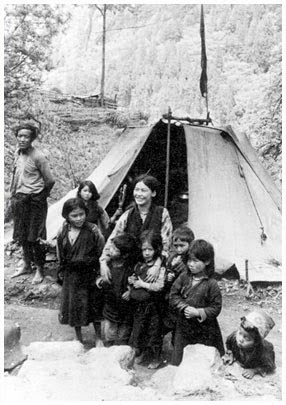
This exquisite portrait of life in the Himalayan kingdom of Sikkim was banned for many years in India and only recently has been revived and lovingly restored in 35mm. If all geographic documentaries were as intelligent, tasteful and compelling as this I'd be glued to whatever specialty channel was broadcasting them for hours, days, weeks, months, if not years on end. Thank God, for my life and general well being, that only Sikkim exists and towers well above the best of this genre of film. It has a simple, but effective structure - we're introduced to the kingdom, delivered a punchy informative history, follow the activities of its inhabitants, get to meet the royal family and finally follow a massive cultural festival in its glory. Ray, in his great dramas surely rivalled Ingmar Bergman in terms of capturing the indelible landscapes of the human face. Here, in this documentary, he continues the tradition. The film's gorgeously shot, beautifully written and expertly narrated by Ray himself. This is not only filmmaking at its finest, but an important slice of a time and place that now remains etched upon celluloid forever.
The Inner Eye (1972)
Dir. Satyajit Ray 20mins. ****
Review By Greg Klymkiw
This is probably one of the best, if not the best documentary portrait of a visual artist I've ever seen.
Ray focuses on the great Indian visual artist Binod Behari Mukherjee (with whom Ray studied). Ray again writes gorgeous narration, delivers it beautifully and captures the essence of this astounding treasure of Indian art by ultimately letting the man and the work speak for itself.
Ray delivers a deft series of biographical details, captures the artist's philosophies on art and life and maybe inadvertently opens a window upon Ray's great visual work as a filmmaker by the manner in which he presents Mukherjee's art.
Of course, the most extraordinary aspect of this tale is that the Master himself eventually went blind, but tapped into his "inner eye" to keep creating stunning work in spite of his handicap.
A truly beautiful and inspirational experience and Ray captures it in only 20 minutes. It's 20 minutes wherein life seems to stand still and we get a glimpse into one of fine art's great geniuses.
Bala (1976) Dir. Satyajit Ray 29mins. ***1/2
Review By Greg Klymkiw
Balasaraswati (known by her more popular diminutive stage name Bala) was already in her 60s when this documentary portrait of her was made. This prima ballerina who specialized in the art of the Bharatanatyam dance had continued to practice her art. Using a wealth of archival materials, Ray delivers the fascinating biographical details of her life, renders aspects of her contemporary life and frames everything within the context of two full dances. Ray captures her dancing simply and beautifully - once in the studio, and again out against a stunning natural backdrop. He keeps a mostly fixed position and only moves his camera with her movement. The dances themselves are so spectacular that one interview subject talks about how Bala's dance had the legendary Martha Graham shuddering and weeping with astonishment. Ray's indelible portrait is such that we do not doubt this for a second.
Two (1964) Dir. Satyajit Ray 15mins. ****
Review By Greg Klymkiw
This simple, beautifully shot (in gorgeous black and white) fable of haves and have-nots is as delightfully entertaining as it is deeply and profoundly moving. Ray tells his tale with no dialogue whatsoever. A little rich boy on the second floor of his family's home plays alone with his huge collection of expensive toys. At one point, he looks outside the window and sees a poverty-stricken youth also playing by himself. The two lads make a connection, but soon the rich boy is demonstrating all his wonderful toys in a gloatingly uncharitable manner. The film turns into a rivalry between two children on the extreme opposites of social strata. Where it ends up, finally, is a heartbreaker. Such is the art of Maestro Satyajit Ray.
The Inner Eye: Four Shorts (THE INNER EYE, SIKKIM, BALA, TWO) By Satyajit Ray is presented at TIFF Bell Lightbox on Tuesday, July 15, 2014 at 8:45 p.m. as part of the TIFF Cinematheque series "The Sun and the Moon: The Films of Satyajit Ray". NOTE: Sikkim IS A RESTORED 35MM FILM PRINT & Two IS A RESTORED 16MM FILM PRINT. This might be your only chance to see this masterpiece the way it was meant to be seen, so get your tickets NOW and GO. Visit the TIFF website for further details by clicking HERE.
DON'T FORGET TO BUY YOUR SATYAJIT RAY MOVIES FROM THE LINKS TO AMAZON.CA, AMAZON.COM and AMAZON.UK, BELOW. DOING SO WILL ASSIST WITH THE ONGOING MAINTENANCE OF THE FILM CORNER.
*BUYERS PLEASE NOTE* Amazon.ca (Canadian Amazon) has a relatively cruddy collection of Satyajit Ray product and generally shitty prices. Amazon.com has a huge selection of materials (including music and books) and decent prices. Amazon.UK has a GREAT selection of Satyajit Ray movies from a very cool company called Artificial Eye (second these days only to the Criterion Collection). Any decent Chinatown sells region-free Blu-Ray and DVD players for peanuts. Just get one (or several - they can be that cheap) and don't be afraid of ordering from foreign regions. The fucking film companies should just merge the formats into one acceptable delivery method worldwide. Besides, you can order anything you want from any country anyway.
AMAZON.CA:
AMAZON.COM:
Thứ Năm, 10 tháng 7, 2014
THE BIG CITY (MAHANAGAR) - Review By Greg Klymkiw - Newly RESTORED 35mm FILM PRINT during The Films of Satyajit Ray @ TIFF Bell Lightbox #tiffcinematheque AND in the STUNNING BRD & DVD from the visionary home entertainment label the CRITERION COLLECTION!!! See it on the BIG SCREEN, then BUY it to OWN FOREVER!!!
Don't miss a single one of these great films on display at TIFF Bell Lightbox in the TIFF Cinematheque series "The Sun and the Moon: The Films of Satyajit Ray". From visionary programmer James Quandt, this is one of the most important retrospectives ever presented in Canada. If you care about cinema, you can't afford to miss even one. Heed the warning below!!! The Film Corner & Mr. Neeson mean business!!!
THE BIG CITY (MAHANAGAR) - RESTORED
35mm FILM PRINT @ #TiffBellLightbox
and on gorgeous BLU-RAY and DVD
from THE CRITERION COLLECTION!!!
35mm FILM PRINT @ #TiffBellLightbox
and on gorgeous BLU-RAY and DVD
from THE CRITERION COLLECTION!!!
![]() |
| Anil Chatterjee dolls up in Satyajit Ray's The Big City. Directors who made art films in the 50s, 60s and 70s understood that they had to cast: GREAT ACTRESSES who were also MAJOR LEAGUE BABES!!! |
![]() |
| Gorgeous new cover art by Marian Bantjes for the extras-laden Criterion Blu-Ray. |
Dir. Satyajit Ray
Starring: Madhabi Mukherjee, Anil Chatterjee,
Jaya Bhaduri, Haren Chatterjee, Sefalika Devi,
Prasenjit Sarkar, Haradhan Banerjee, Vicky Redwood
Review By Greg Klymkiw
The Big City [Mahanagar] is such a great picture that even though it suffers somewhat from a rushed, unearned ending, its joys and virtues are many. Satyajit Ray delivers yet another masterpiece for the ages. This lovely amalgam of family drama and love story is once again another example of just how ahead of his time Ray was. The central character is female and she drives the entire engine of the story. Arati (Madhabi Mukherjee) is a young, hard-working housewife who toils with a face of happiness and tries to reserve any expressions of concern to herself. Though her husband Subrata (Anil Chatterjee) has a decent lower middle class job in the city as a loans officer at a bank, his financial obligations are almost ruinous. Not only is his salary supporting a wife, but also their little boy Pintu (Prasenjit Sarkar), Arati's still unmarried teenage sister and student Bani (Jaya Bhaduri), his father Priyogopal (Haren Chatterjee) and mother Sarojini (Sefalika Devi).
The family lives paycheque to paycheque and Arati is occasionally forced to borrow certain staples from the neighbours. Priyogopal is a former school teacher, now old, infirm and needing new prescription lenses so he can properly see his crossword puzzles. Bani feels guilt about going to school when she should be bringing in income (especially when she's chided that she won't need an education since she's a woman and will inevitably get married). Sarojini even feels like she and her husband are milestones around the neck of this young family. The pressures of poverty are considerable which, of course, brings considerable shame to Subrata.
Things take a positive turn when husband and wife decide that an extra income is needed and well within their grasp. After all, there are plenty of people to run the household, so it's not as if Arati can't take on another job.
Here the film springs into a joyous mode as Arati, for the first time in her life, leaves the confines of home and hearth to work as a door-to-door saleslady, hawking knitting machines along with a team of young woman. Arati discovers a new found independence, but in so doing, realizes she has a great gift for sales and it doesn't take long for her to earn a promotion as the head of the whole team. The money she starts bringing into the household is considerable.
Madhabi Mukherjee is such a stirring, stunning, sexy presence in this film. It's no wonder she was one of India's biggest and brightest stars, as well as being a favourite of Ray's (she starred in his wonderful Charulata). Her role demands wearing a variety of masks - some tried and true, but others all new. Mukherjee handles Arati's blossoming with steadily mounting subtlety and it's also no wonder her role was so appealing to her as an actress. Women, were so often second fiddles in Indian cinema, but not in Satyajit Ray's films and especially not in Mahanagar.
All is not sweetness, light and empowerment. Ray deftly handles the new burdens facing both Arati and her family. Her child misses her, Arati feels even more ashamed at how well his wife is doing in the business world and his father is appalled that his son would be such a weak man that he'd allow his wife to work. For his part, Priyogopal has always had a chip on his shoulder about slaving for years as a schoolteacher and now, in his august years, lives with no pension and under his son's roof. He's proud that all his former students went on to become such successful and rich professional men, but he also feels they owe him something, so he begins a campaign to track them all down and essentially beg money from them - money he feels they owe him.
On the work front, Arati is also faced with a huge challenge. Though her boss clearly values her, she's not too impressed with how he's been prejudicially treating one of the employees, an Anglo-Indian woman who is not only her friend, but the constant butt of the boss's disdain. Arati has some big decisions to make and one of them involves taking a huge stand against the injustices perpetrated by her boss.
The film is so stirring, funny, touching and tender that after having seen it a few times now, I'm still disappointed with the manner in which it resolves all of the conflicts so quickly. Ray has been so careful to take his time wending his way through the tale and yet in the most crucial moments, the storytelling seems to falter. What transpires makes complete narrative sense, but how he gets us there seems too pat and unearned.
And you know what? It doesn't matter. The movie is otherwise infused with such greatness that it still has stood the test of time as yet another Satyajit Ray masterpiece. He really was one of the best filmmakers of all time. We're so blessed he was able to make the films he wanted his way in an industry that was never too open to the kind of contemporary realities facing India that Ray explored so often and so well.
Mahanagar (The Big City) is presented at TIFF Bell Lightbox on July 12, 2014 at 3:45pm as part of the TIFF Cinematheque series "The Sun and the Moon: The Films of Satyajit Ray". NOTE: THIS IS A RESTORED 35MM. This might be your only chance to see this masterpiece the way it was meant to be seen, so get your tickets NOW and GO. Visit the TIFF website for further details by clicking HERE.
After you've seen this on a big screen, you'll absolutely kill to own the Criterion Collection Blu-Ray. This is a film to cherish and Criterion has pulled out all the stops with the supplements. In addition to the all-new restored 2K digital film transfer, with uncompressed monaural soundtrack, the disc includes a brand new interview with Madhabi Mukherjee, a terrific short doc/interview with Suranjan Ganguly entitled Satyajit Ray and the Modern Woman, The Coward, a wonderful 1965 short feature by Ray about modern female identity starring Mukherjee and Soumitra Chatterjee, B.D. Darga's excellent 1974 short documentary Satyajit Ray, great English subtitles newly translated and the de rigour Criterion booklet that has an essay by scholar Chandak Sengoopta and a 1980s interview with Ray by the inimitable Andrew Robinson.
Đăng ký:
Bài đăng (Atom)